





Newsletter Subscribe
Enter your email address below and subscribe to our newsletter

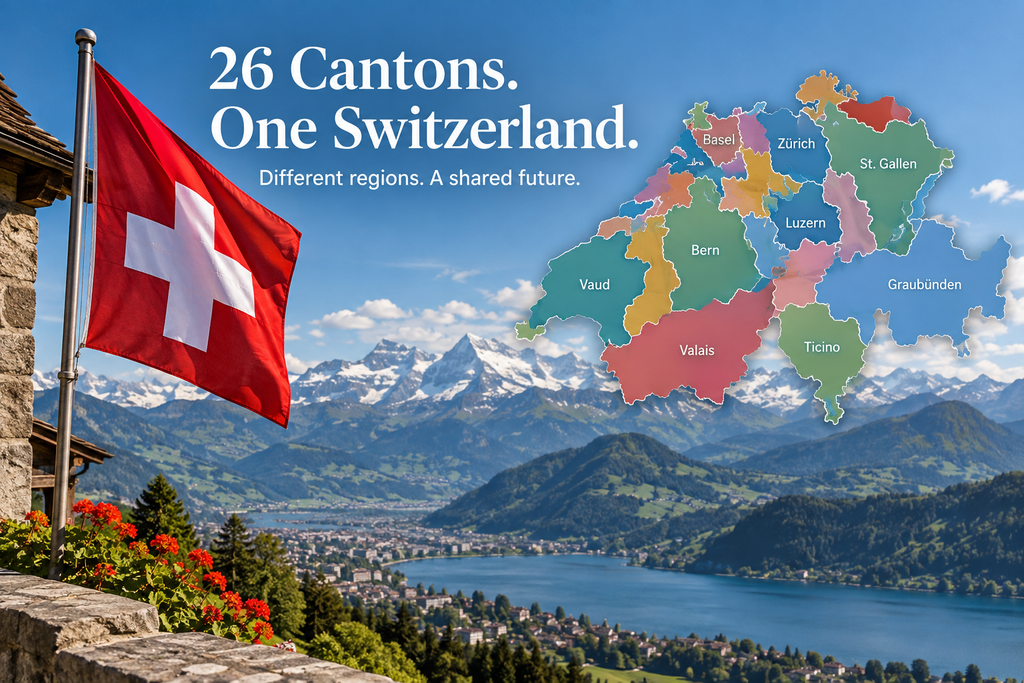
Switzerland is a small country. Yet it is divided into 26 cantons — each with its own government, parliament, courts and constitution. Why?
Look at Switzerland on a map and something seems strange.
The country has only around nine million inhabitants.
Yet it has 26 cantons.
Some are enormous by Swiss standards. Others are tiny.
Zürich has well over a million inhabitants. Uri has only around 40,000.
Yet both send two representatives to Switzerland’s Council of States.
The differences go much further than population.
Cantons have their own governments, parliaments, courts and constitutions. They have considerable taxation powers, organize their own school systems and are responsible for policing and many other areas of everyday government.
Cross a cantonal border and you remain in the same country.
But some of the rules can change.
Why would such a small country build such a complicated system?
Because Switzerland didn’t create the cantons.
The cantons created Switzerland.
To understand the 26 cantons, forget the modern Swiss map for a moment.
There was no original Swiss central government that drew internal borders and divided its territory into administrative regions.
Instead, communities, valleys, cities and territories gradually formed alliances with one another.
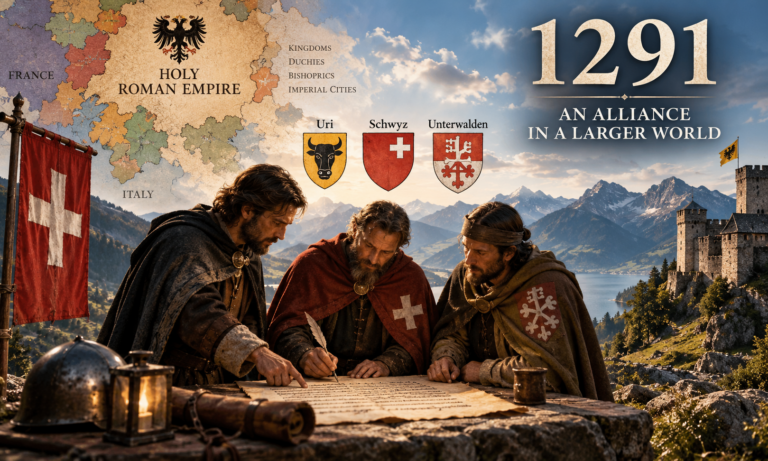
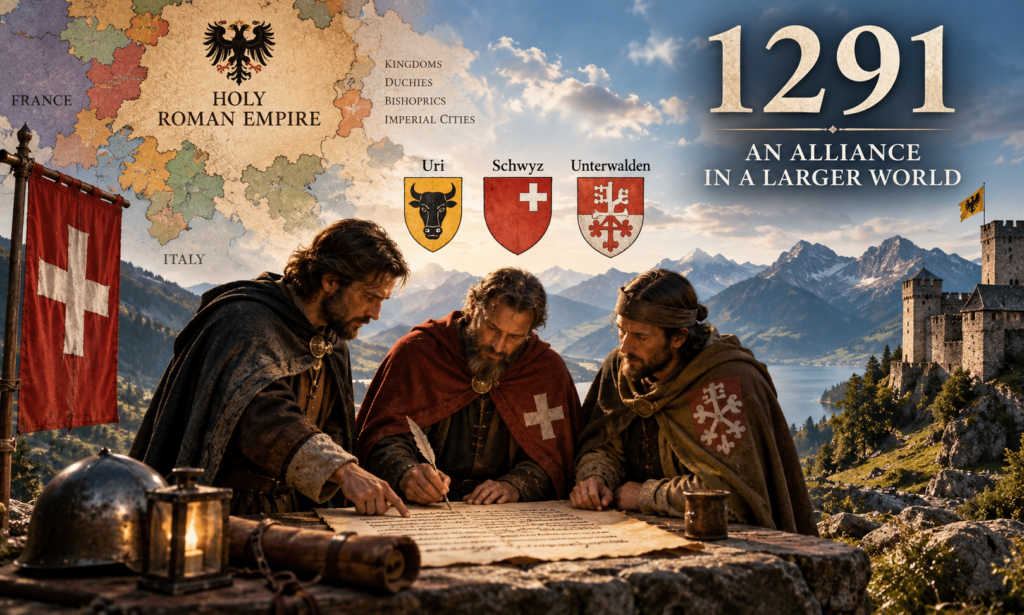
The traditional starting point of the Swiss Confederacy is the alliance associated with Uri, Schwyz and Unterwalden, documented in the Federal Charter of 1291.
But this was not yet Switzerland in the modern sense.
There was no Swiss president, federal parliament, national capital or modern federal government.
What developed instead was a complicated network of alliances.
Lucerne became part of this expanding network in 1332, Zürich in 1351, Glarus and Zug in 1352, and Bern in 1353.
Other members followed later.
By 1513, the Old Swiss Confederacy consisted of 13 members, traditionally known as the XIII Orte.
But even that doesn’t tell the whole story.
The Confederacy also included allied territories, common lordships and subject territories whose inhabitants did not necessarily enjoy the same political status as the ruling members.
This was not one unified country divided into 13 provinces.
It was a loose and complicated political system whose members retained enormous independence.
They cooperated. They negotiated. They fought common enemies. They administered territories together.
And sometimes they fought each other.
Switzerland did not begin as one state.
It began as multiple political communities learning how to coexist.
For centuries, this decentralized Confederacy survived.
Then the French Revolution transformed Europe.
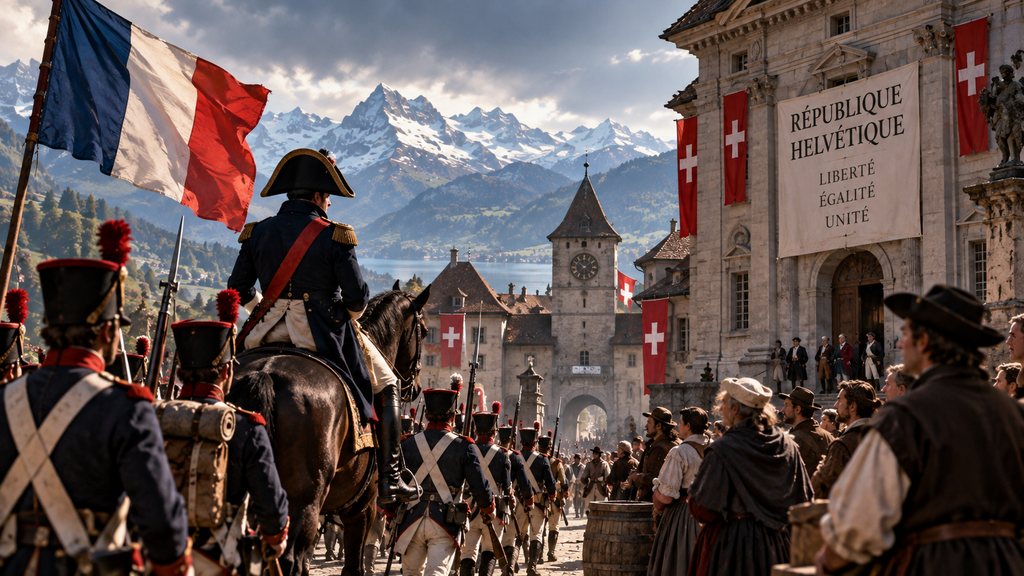
In 1798, French forces invaded Switzerland and the old Confederacy collapsed.
In its place came the Helvetic Republic.
The change was radical.
Instead of a loose association of largely autonomous territories, Switzerland was reorganized as a centralized republic.
The cantons lost much of their previous political independence and became administrative divisions within the new state.
The new system also abolished many privileges and inequalities of the old order.
But centralization faced intense resistance.
Switzerland contained communities with very different political traditions, religions, languages and local identities.
The Helvetic Republic was also plagued by internal conflict, foreign intervention and instability.
By 1802, the system was close to collapse.
Napoleon intervened.
In 1803, Napoleon issued the Act of Mediation.
The centralized Helvetic Republic disappeared and substantial authority returned to the cantons.
At the same time, an important transformation survived the revolution.
Several territories that had previously been subordinate gained equal status as cantons:
Aargau, Thurgau, St. Gallen, Ticino, Vaud and Graubünden.
Switzerland now consisted of 19 cantons.
This was an important step toward the modern map.
It also revealed a pattern that would repeatedly shape Swiss history:
Switzerland could become more integrated without eliminating cantonal autonomy.